A stone coffee table is one of the few furniture investments that genuinely improves with age — its material weight, natural variation, and surface character give a living room an anchor that upholstered or wood furniture cannot replicate. But stone is also a material that punishes the uninformed buyer: the wrong stone type in the wrong household, combined with inadequate sealing and careless daily use, can turn a beautiful piece into a permanently stained, etched, or cracked liability. This article covers what you actually need to know before purchasing a stone coffee table — the practical differences between stone types, the style contexts where each performs best, how to care for stone surfaces correctly, and how to decorate around a stone table to make it the visual centerpiece your living room deserves.
The Most Common Stone Types Used in Coffee Tables
Not all stone performs equally on a coffee table surface. The mineral composition, porosity, hardness, and visual character of each stone type determine both its suitability for a coffee table's daily demands and the maintenance commitment it requires from you over its lifetime.
Marble
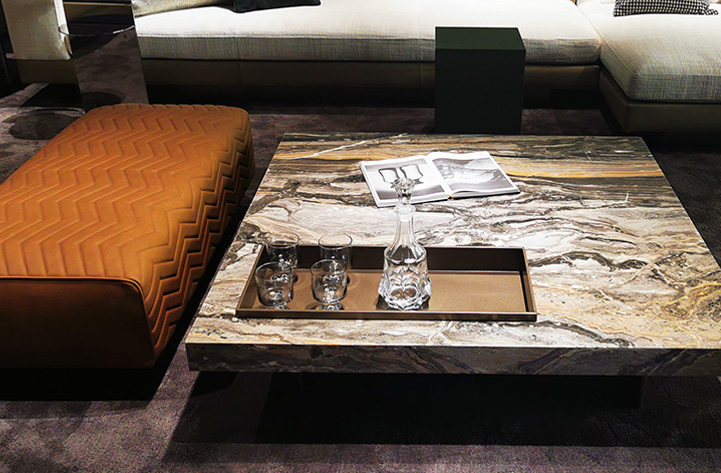
Marble is the most visually dramatic stone for coffee table applications — its veining patterns, translucent depth of surface, and the way it reflects light give a marble-topped table an immediate luxury presence that no other material matches. White Carrara marble, with its soft gray veining on a white ground, is the most commonly specified variety for contemporary and transitional interiors. Calacatta, with bolder, more contrasting veining, suits maximalist and high-end traditional spaces. Nero Marquina black marble with white veining works in modern and Art Deco-influenced rooms. The critical limitation of marble for coffee table use is its vulnerability to acid etching — any acidic substance, including wine, fruit juice, coffee, and even some cleaning products, chemically reacts with the calcium carbonate in marble and leaves a permanently dull, matte mark on the polished surface that cannot be removed by cleaning. Marble coffee tables suit households with consistent coaster use habits and require resealing once or twice annually.
Travertine
Travertine is a sedimentary limestone formed by mineral spring deposits and is characterized by its warm, earthy tones — ranging from creamy beige and ivory to warm walnut brown — and its distinctive surface pitting or filled-and-honed texture. Travertine coffee tables have a naturally organic, aged quality that suits rustic, Mediterranean, Tuscan, and warm contemporary interior styles particularly well. Filled and honed travertine, where the natural voids in the stone's surface are filled with grout or epoxy and then honed to a flat matte finish, is more practical for coffee table use than unfilled travertine, where liquid and debris can accumulate in the surface pits. Like marble, travertine is calcareous and therefore susceptible to acid etching, requiring the same protective sealing and acidic substance awareness. Its matte finish, however, makes etching less visually obvious than on polished marble.
Granite
Granite is significantly harder and more resistant to both scratching and acid etching than marble or travertine, making it the most durable natural stone option for coffee table surfaces in households with children, pets, or less disciplined coaster habits. Its crystalline structure — composed primarily of quartz, feldspar, and mica — does not react with acids in the way that calcareous stones do, making it nearly impervious to the etching that permanently marks marble. Granite's visual character is different from marble's — it presents a speckled, granular pattern rather than flowing veins — which suits some design contexts better than others. It works well in contemporary, industrial, craftsman, and rustic interiors. Its density makes granite coffee tables exceptionally heavy, which is both a stability advantage and a logistical challenge during delivery and room rearrangement.
Slate
Slate coffee tables bring a distinctly different aesthetic from marble or granite — the stone's layered structure and matte, dark surface (typically charcoal, dark gray, or blue-black) create a grounded, textural quality that works particularly well in industrial, Scandinavian, mid-century modern, and eclectic interiors. Slate is non-calcareous and acid-resistant, which gives it practical advantages over marble in daily use, though its softer surface scratches more easily than granite. The natural cleft surface of slate — the rough, textured finish that results from the stone splitting along its natural planes — adds tactile interest but can catch debris and requires more attentive cleaning than polished surfaces. Honed slate with a smooth surface is easier to maintain while retaining the stone's characteristic matte tone.
Sintered Stone and Engineered Alternatives
Increasingly, coffee tables are marketed as "stone" while using sintered stone (such as Neolith, Dekton, or similar products) — a man-made material produced by compressing and heat-treating natural stone particles, minerals, and pigments under extreme temperature and pressure into a dense, non-porous slab. Sintered stone coffee tables offer essentially the aesthetic of natural stone with near-total elimination of the porosity, acid etching, and staining vulnerabilities that natural stone requires management strategies for. They are harder and more heat resistant than natural stone and require no sealing. For households prioritizing practicality alongside aesthetics, sintered stone represents the most genuinely low-maintenance stone coffee table option available.
Stone Coffee Table Styles and Which Interior They Suit
The stone material is only part of the style decision — the table's silhouette, base design, and overall form equally determine how well it integrates with the surrounding room. Stone coffee tables come in a range of design languages that correspond to different interior aesthetics.
| Style |
Stone Type |
Base Design |
Interior Pairing |
| Minimalist Modern |
White marble, white sintered |
Thin slab, brushed steel legs |
Contemporary, Scandinavian |
| Industrial |
Slate, dark granite |
Raw steel frame, pipe legs |
Industrial loft, urban |
| Traditional / Classic |
Polished marble, travertine |
Carved stone base, gilded metal |
Classic European, formal |
| Organic / Biophilic |
Live-edge travertine, rough granite |
Organic shape, wood or bronze |
Bohemian, earthy contemporary |
| Mid-Century Modern |
Marble, slate |
Tapered wooden legs, geometric frame |
Mid-century, retro contemporary |
| Japandi |
Honed marble, sintered stone |
Low profile, minimal dark wood |
Japandi, wabi-sabi |
The profile height of a stone coffee table also affects its style register significantly. Low-profile tables at 35 to 40 cm height — common in Japanese-influenced and minimalist designs — create a relaxed, floor-oriented aesthetic that suits casual or meditative living room arrangements. Standard-height stone tables at 45 to 50 cm align with conventional sofa seat height and function more practically as working surfaces for laptops, books, and drinks. Oversized statement tables exceeding 130 cm in length shift the stone table from a functional surface to an architectural room element — typically the dominant visual anchor around which the rest of the seating arrangement is organized.
How to Care for a Stone Coffee Table Correctly
Stone coffee table maintenance divides into daily habits, periodic sealing for porous stones, and specific spill response protocols that prevent temporary problems from becoming permanent damage. The maintenance requirements vary substantially between stone types, and understanding them before purchase is as important as understanding the stone's aesthetic qualities.
Daily and Weekly Cleaning
Routine cleaning of any stone coffee table surface should use a soft, lint-free cloth or microfiber — never abrasive pads, scourers, or rough paper towels that can scratch polished surfaces. For daily dust and light debris removal, a dry or barely damp cloth is sufficient. For cleaning after spills or general surface wiping, use a pH-neutral stone cleaner or diluted dish soap in warm water, applied with a soft cloth and rinsed immediately with clean water. Never use general household cleaners including vinegar, lemon juice, bleach, ammonia-based products, or any multi-surface spray — these are acidic or alkaline enough to etch calcareous stones or strip sealant from sealed surfaces over time. The investment in a dedicated stone cleaner — available from stone suppliers and home improvement stores — costs very little relative to the cost of the table itself and protects the surface finish consistently.
Sealing Porous Stone Surfaces
Marble, travertine, and many granite varieties are porous to varying degrees and should be sealed with a penetrating impregnating sealer before use and periodically throughout their service life. The sealer penetrates the stone's pore structure and creates a hydrophobic barrier that causes liquids to bead on the surface and provides additional time to wipe up spills before they penetrate and stain. The sealer does not prevent acid etching on marble and travertine — that is a chemical surface reaction, not a penetration issue — but it substantially reduces staining from oils, wine, coffee, and other colored liquids that would otherwise absorb directly into unsealed stone.
Test whether your stone needs resealing using the water drop test: apply a few drops of water to the stone surface and observe the behavior. If the water beads and remains on the surface for several minutes without darkening the stone, the sealer is still effective. If the water is absorbed quickly and darkens the stone below the drop within a minute or two, resealing is needed. Most marble and travertine coffee tables require resealing every 6 to 12 months depending on use intensity; granite may require less frequent sealing. Sintered stone and engineered stone require no sealing.
Spill Response Protocol
Speed of response to spills is the single most important variable in preventing permanent staining on stone coffee table surfaces. The protocol is: blot immediately — never wipe, which spreads the liquid into a larger surface area — using an absorbent clean cloth. Blot from the outside of the spill inward to prevent spreading. Follow with a water-dampened cloth to remove residue, then dry the area immediately. For oily spills on marble or travertine, apply a paste of baking soda and water (a poultice) to the dried residue, cover with plastic film, and leave for 24 hours to draw the oil from the stone's pores before wiping clean. For acid etching on marble — the dull, matte mark left by wine, juice, or cleaning product contact — professional marble polishing or the use of a marble polishing powder compound is required to restore gloss; etching cannot be removed by cleaning alone.
Decorating Around a Stone Coffee Table
A stone coffee table's visual weight and material presence require thoughtful styling choices in the objects placed on and around it, and in the surrounding furnishings that share the room. The goal is to let the stone's natural character speak without competing with it or being overwhelmed by an overcrowded surface.
What to Place on the Table
The traditional coffee table styling rule of three — one tall element, one medium element, and one low or flat element — works particularly well on stone surfaces because the flat, hard surface provides a clean backdrop that allows each object's form to read clearly. For a marble table, consider a sculptural ceramic vase with a single stem or branch (tall), a stack of art books with a small object placed on top (medium), and a low tray containing a candle, small stone, or coral piece (flat). The tray serves the dual purpose of adding visual organization and protecting the surface from direct contact with small items that could scratch. Avoid plastic, rubber-based, or adhesive materials in direct contact with stone surfaces — these can leave marks or lift sealant from the stone over time.
- For marble tables: White, cream, warm gold, and soft green objects complement marble's veining without competing with it. Sculptural white ceramics, brass candleholders, dried botanicals in natural tones, and books with matte covers styled in monochromatic stacks are all sympathetic choices. Avoid highly saturated, bright-colored objects that fight for visual dominance with dramatic marble veining.
- For travertine tables: The warm, earthy palette of travertine is complemented by terracotta, aged bronze, raw linen, dried grasses, and natural wood objects. Handmade ceramic pieces with organic glazes, wooden bowls, and natural fiber coasters reinforce the material's connection to land and warmth. Avoid cold metallics and clinical white objects that clash with travertine's earthiness.
- For slate and dark granite tables: The darkness of these surfaces creates a strong contrast backdrop for lighter or warm-toned objects. Aged brass, copper, warm white ceramics, light natural linen napkins, light-toned wood objects, and dried flowers in bleached or golden tones all stand out effectively against dark stone. Avoid black or very dark accessories that disappear against the stone's surface.
Coordinating with Surrounding Furniture
Stone coffee tables create the strongest visual impact when their material character is echoed — not matched — in other room elements. A white marble table in a room with warm-white linen sofas, light oak side tables, and plaster-finish walls creates a cohesive material palette where the marble feels like a natural participant rather than an imported statement. The most common mistake is introducing a stone coffee table into a room without any other natural material references — the stone then reads as an anomaly rather than an anchor, and the room feels visually disjointed.
The rug beneath a stone coffee table plays an outsized role in the overall composition. A large, flat-weave or low-pile rug in natural fibers — jute, sisal, wool, or cotton — grounds the stone table's visual weight and adds the warmth and texture that stone's cool, hard surface inherently lacks. Avoid placing stone tables on thick, high-pile shag rugs — the table's weight can compress pile permanently, and the softness of the rug base creates an instability that feels visually incongruous with the table's substantial material weight.
Practical Considerations Before Purchasing
Beyond style and stone type, several practical factors determine whether a stone coffee table will work successfully in a specific home environment.
- Weight and floor loading: Stone coffee tables are significantly heavier than equivalent wood or glass alternatives — a full marble slab table can weigh 80 to 150 kg. Verify that your floor structure can accommodate this load without deflection, particularly in upper-floor apartments with timber joist construction. Confirm delivery access — staircases, lifts, and doorway widths must accommodate the table's dimensions, and professional stone furniture delivery teams may be required.
- Household composition: Stone coffee tables with sharp corners in marble or granite are not ideal for households with young children who are at risk of collision with table edges. Look for tables with beveled or bullnose edge profiles that soften the impact risk, or consider travertine with its naturally softer visual character and slightly less clinical edge profile than polished marble.
- Natural variation acceptance: Every natural stone slab is unique — the veining pattern, color distribution, and surface character of the table you receive will differ from showroom samples or product images. This is an inherent and desirable characteristic of natural stone, not a quality defect, but it surprises buyers accustomed to manufactured materials with consistent appearance. If precise visual consistency is important, sintered stone is a more appropriate choice than natural stone.
- Long-term commitment: A high-quality stone coffee table is a decades-long investment, not a seasonal decor item. Before purchasing, consider whether the table's style and stone type will remain relevant as the room evolves. Neutral stone tones — white marble, warm travertine, charcoal slate — adapt more readily to changing surrounding furnishings than highly dramatic stones with strong, distinctive patterning that can become visually dominant and difficult to redecorate around.
A stone coffee table, chosen with clear understanding of the material's behavior and maintained with appropriate daily care and periodic sealing, pays back its investment through decades of visual presence and functional durability that few other furniture materials can match. The time spent understanding stone types, maintenance requirements, and design integration before purchase is the difference between an heirloom piece that anchors a room beautifully for a generation and a costly purchase that disappoints within its first year of daily use.



 English
 Français
 عربى
عربى italiano