Why Kitchen Marble Benchtops Remain a Top Choice for Homeowners
Marble has been used as a premium surface material for thousands of years, and its appeal in the modern kitchen shows no sign of fading. Kitchen marble benchtops offer a combination of natural beauty, unique veining patterns, and a cool surface temperature that no engineered material has fully replicated. Each slab is quarried from natural stone deposits and carries its own distinctive character — no two marble benchtops are identical, which is part of what makes them so desirable for homeowners who want a kitchen that feels genuinely individual rather than mass-produced.
Beyond aesthetics, marble has practical properties that suit specific kitchen uses particularly well. Its naturally cool surface makes it an excellent choice for pastry work and baking, as dough and chocolate resist softening on a cold stone surface in a way they would not on timber or laminate. The weight and solidity of a properly installed marble benchtop also contributes to a sense of quality and permanence that adds tangible value to a home. However, marble is a material that demands an informed approach — understanding its properties, maintenance requirements, and realistic limitations before installation is essential to long-term satisfaction.
What Types of Marble Are Commonly Used for Kitchen Benchtops?
Not all marble is the same, and the variety chosen for a kitchen benchtop significantly affects both its appearance and its practical performance. Marble is a metamorphic rock formed when limestone is subjected to intense heat and pressure, and its mineral composition, porosity, and hardness vary considerably between quarry origins and geological formations.
Carrara Marble
Carrara marble, quarried in the Apuan Alps of Tuscany, Italy, is the most widely used and widely recognized marble variety in kitchen applications worldwide. It is characterized by a white to blue-grey base with soft, feathery grey veining. Carrara is relatively accessible in price compared to rarer marble varieties and is available in large slab sizes suitable for unjointed benchtop runs. It is moderately porous and requires consistent sealing to resist staining from acidic kitchen substances such as lemon juice, tomato, and coffee. Carrara is the default choice for homeowners seeking the classic Italian marble aesthetic at a realistic budget.
Calacatta Marble
Calacatta marble is quarried in a more restricted area of the Carrara region and is distinguished from standard Carrara by its brighter white background and bolder, more dramatic veining in gold, beige, or deep grey tones. It is significantly rarer and more expensive than Carrara and is considered one of the most prestigious natural stone materials available for residential interiors. Calacatta is favored in high-end kitchen renovations where the benchtop is intended to serve as a statement feature. Its higher price point reflects both its relative scarcity and the strong design demand it commands globally.
Statuario Marble
Statuario marble is another premium Italian variety with an almost pure white base and distinctive bold grey or gold veining. It is rarer than Calacatta and commands the highest prices among the mainstream Italian white marbles. Statuario slabs often display particularly dramatic veining patterns that make them visually striking as feature benchtops or island tops in open-plan kitchen designs. Due to its rarity, Statuario is frequently referenced in the design of high-quality porcelain and engineered stone products that attempt to replicate its appearance.
Nero Marquina and Emperador
For homeowners seeking darker benchtop aesthetics, Nero Marquina from Spain offers a dramatic black base with bright white veining, while Emperador varieties from Spain and Turkey range from dark chocolate brown to light caramel tones with contrasting veining. These darker marbles suit contemporary and industrial kitchen designs and have the practical advantage of showing less visible staining from dark liquids compared to white marble varieties, though they are equally susceptible to acid etching and require the same sealing and care regimens.
Understanding the Practical Challenges of Marble in a Kitchen Environment
Marble is a beautiful but demanding material, and the kitchen is one of the most challenging environments in a home for any natural stone surface. Understanding the specific vulnerabilities of marble before installation allows homeowners to make an informed decision and to set realistic expectations about how the surface will age over time.
Acid Etching
The most significant practical concern with marble kitchen benchtops is their susceptibility to acid etching. Marble is composed primarily of calcium carbonate, which reacts chemically with acidic substances to dissolve the polished surface layer, leaving dull, lighter-colored marks known as etch marks. Common kitchen acids that cause etching include lemon juice, vinegar, wine, tomato sauce, coffee, and even some commercial cleaning products. Etch marks are not the same as stains — they are physical changes to the stone surface and cannot be removed by cleaning. Minor etching can be polished out by a stone restoration professional, but deep or extensive etching requires mechanical re-polishing of the entire surface, which is costly and time-consuming.
Staining and Porosity
Marble is a porous material, and without proper sealing, liquids penetrate the surface and leave permanent stains. Oils from cooking, red wine, fruit juices, and colored sauces are all capable of staining unsealed or inadequately sealed marble. A high-quality penetrating sealer applied to the stone surface fills the pores and provides a barrier against liquid absorption, but sealers are not permanent — they wear away through regular cleaning and require reapplication every six to twelve months depending on the sealer type and the intensity of benchtop use. Even well-sealed marble is not stain-proof; it is stain-resistant, and spills should be wiped up promptly rather than left to dwell on the surface.
Scratching and Impact Resistance
Marble rates between 3 and 5 on the Mohs hardness scale, making it softer than granite (6–7), quartzite (7), and engineered quartz (approximately 7). It can be scratched by hard kitchen utensils, abrasive cleaning pads, and coarse particles dragged across the surface. Cutting directly on marble is strongly inadvisable — it damages both the benchtop and knife edges. Heavy impacts from cast iron cookware can chip the edges or surface of a marble slab, particularly at thin edges or around undermount sink cutouts where the stone cross-section is reduced.
How Does Marble Compare to Other Popular Benchtop Materials?
Choosing the right benchtop material involves comparing marble honestly against the alternatives across the factors that matter most to each homeowner's lifestyle and kitchen use patterns. The following table provides a practical comparison:
| Material |
Acid Resistance |
Stain Resistance |
Hardness |
Maintenance Level |
Cost Range |
| Marble |
Poor |
Moderate (sealed) |
Moderate |
High |
Medium–Very High |
| Granite |
Good |
Good (sealed) |
High |
Medium |
Medium–High |
| Engineered Quartz |
Good |
Excellent |
Very High |
Low |
Medium–High |
| Quartzite |
Good |
Good (sealed) |
Very High |
Medium |
High–Very High |
| Porcelain |
Excellent |
Excellent |
Very High |
Low |
Medium–High |
This comparison makes clear that marble is not the most practical choice purely on functional grounds. Homeowners who choose marble do so primarily for its unmatched natural beauty and the patina it develops over time — a quality that its most devoted advocates describe as part of the material's living character rather than a deficiency. For households with young children, heavy cooking activity, or a preference for low-maintenance surfaces, engineered quartz or porcelain may be more sensible alternatives that can still approximate a marble-like aesthetic through modern printing and surface technologies.
How to Seal and Care for Marble Kitchen Benchtops Properly
The longevity and appearance of a marble kitchen benchtop are directly determined by how consistently and correctly it is maintained. A properly cared-for marble benchtop will age gracefully and develop a natural patina that many homeowners find deeply appealing. A neglected marble benchtop will show heavy etching, staining, and surface degradation within a relatively short period. The following practices form the foundation of effective marble maintenance:
- Apply a penetrating stone sealer before first use: A quality impregnating sealer should be applied to the benchtop surface before the kitchen is put into service. Apply the sealer according to the manufacturer's instructions, typically allowing it to penetrate for 10–15 minutes before buffing off the excess. Allow full cure time before exposing the surface to moisture or food contact.
- Test sealer effectiveness regularly: Place a few drops of water on the benchtop surface. If the water beads and sits on the surface, the sealer is still effective. If the water darkens the stone and absorbs quickly, it is time to reseal. Most marble kitchen benchtops in active use require resealing every 6 to 12 months.
- Clean with pH-neutral stone cleaners only: Avoid all acidic or alkaline cleaning products including vinegar-based cleaners, bleach, ammonia, and general-purpose kitchen sprays. These damage the sealer and etch the marble surface. Use only cleaners specifically formulated for natural stone, or simply warm water with a few drops of mild dish soap for routine cleaning.
- Wipe spills immediately: Any acidic liquid — citrus juice, wine, coffee, vinegar-based dressings — should be blotted up immediately rather than wiped, as wiping spreads the acid across a larger surface area. Even a sealed benchtop can etch if an acidic liquid is left in contact with the stone for more than a minute or two.
- Use cutting boards and trivets without exception: Never cut directly on marble, and never place hot pans or baking trays directly on the surface. While marble is heat-resistant in practical terms, thermal shock from direct hot pan contact can cause surface cracking in some circumstances, and the combination of heat and oil residue from a pan base can leave difficult marks.
- Use soft cloths for daily cleaning: Abrasive sponges, steel wool, and scouring pads all scratch the polished marble surface. Microfibre cloths are ideal for both cleaning and drying marble benchtops as they lift surface particles without scratching and leave a streak-free finish.
What to Consider When Buying and Installing Kitchen Marble Benchtops
The purchasing and installation process for marble benchtops involves several decisions that affect both the final appearance and long-term performance of the surface. Making informed choices at each stage avoids costly mistakes that cannot be easily corrected once the stone is installed.
Selecting and Viewing Slabs in Person
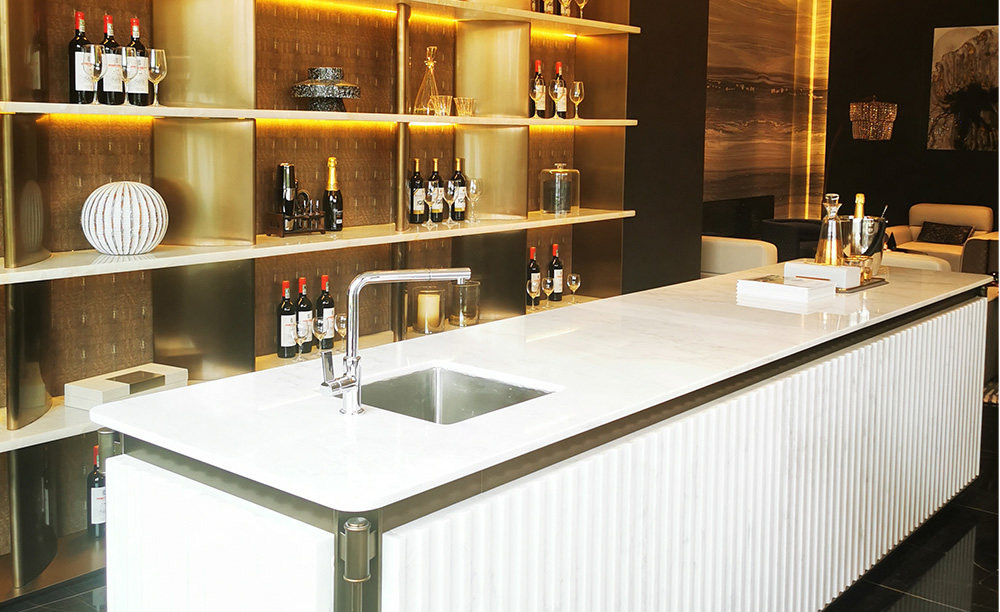
Always view and select marble slabs in person at a stone yard or supplier's showroom rather than ordering from photographs or samples alone. Natural marble varies significantly between slabs from the same quarry batch in terms of veining intensity, background color tone, and movement pattern. Viewing the full slab allows you to assess how the veining flows across the benchtop area, how the pattern will align at joins in L-shaped or U-shaped kitchens, and whether the particular slab's character suits the overall kitchen design. Book-matching — where two slabs are opened like a book to create a mirrored veining pattern — is a popular technique for kitchen islands and requires selecting matched slab pairs at the time of purchase.
Thickness and Edge Profile Selection
Kitchen marble benchtops are most commonly supplied in 20 mm or 30 mm thickness. A 20 mm slab is sufficient for most residential applications and is the more cost-effective choice, while 30 mm slabs offer a more substantial appearance and greater structural robustness for spans over unsupported cabinet openings such as dishwasher and bin pull-out cavities. Edge profiles — the shape given to the visible edge of the benchtop — range from a simple eased or pencil edge to more elaborate ogee, waterfall, or double bullnose profiles. A thicker edge profile adds visual weight and a more premium appearance but increases fabrication cost. Mitred laminated edges, where additional stone is glued to the underside of the slab edge to create the appearance of a thicker slab, are a cost-effective way to achieve the look of a 60 mm or 80 mm edge on a standard 20 mm slab.
Choosing an Experienced Stone Fabricator
The quality of fabrication — the cutting, edging, and installation of the marble — has as much influence on the final result as the quality of the stone itself. An experienced stone fabricator will template the kitchen accurately using digital measuring equipment, position the slab to make the best use of the veining pattern, minimize the visibility of any required joins, and cut sink and tapware cutouts cleanly without cracking the surrounding stone. Request to see examples of previous marble kitchen installations, check references from past clients, and confirm that the fabricator has specific experience with the marble variety you have selected, as some varieties are more brittle during machining than others and require additional care during fabrication.
Is a Marble Kitchen Benchtop the Right Choice for Your Lifestyle?
The honest answer to this question depends entirely on how you use your kitchen and how you relate to natural materials that change over time. Marble kitchen benchtops are an excellent choice for homeowners who cook with care, appreciate natural materials, are willing to invest time in regular maintenance, and can embrace the patina and character marks that develop with use as part of the material's charm rather than as damage to be corrected. Designers, food professionals, and serious home bakers often love marble precisely because it reflects its history of use and becomes more characterful over time.
Marble is a more challenging choice for households with very young children where spills and impacts are frequent, for homeowners who want a completely maintenance-free surface, or for kitchens where acidic cooking — involving large quantities of citrus, vinegar, or wine — is a daily occurrence. For these households, a high-quality porcelain slab or engineered stone product that replicates the look of marble offers a more practical solution that still delivers a premium aesthetic without the ongoing care demands. Whatever material is ultimately chosen, taking the time to understand its properties fully before installation is the most important step toward long-term satisfaction with any kitchen benchtop investment.



 English
 Français
 عربى
عربى italiano