Most people do not spend much time thinking about the kitchen bench top until the renovation is already halfway through. Then the questions arrive all at once: which material, how thick, what edge, how much upkeep. It is worth pausing on, because the bench top is the one surface you touch before breakfast, after dinner, and dozens of times in between. It shapes how the kitchen feels under your hands, how long cleanup takes, and how gracefully the room ages.
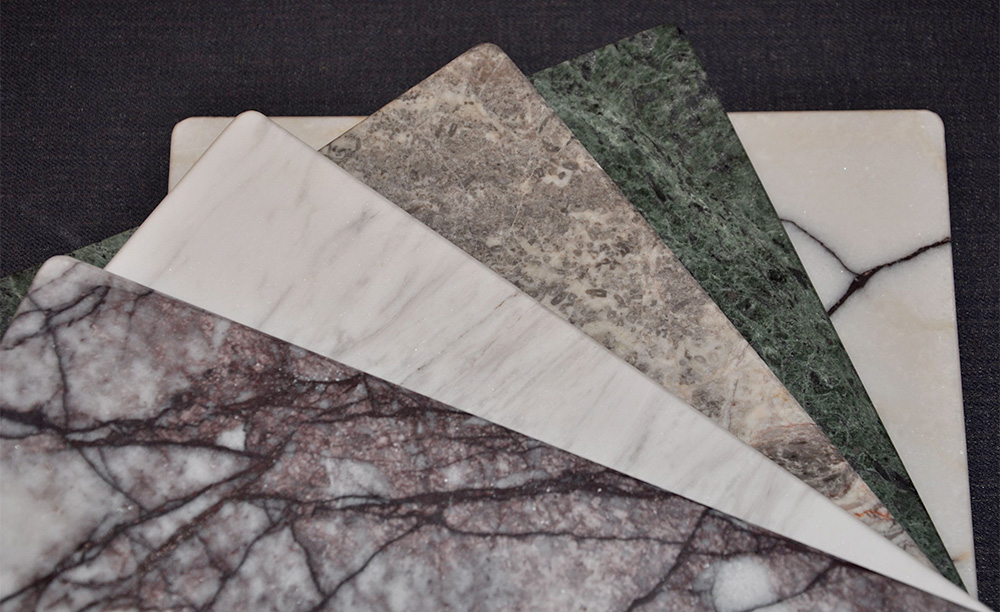
Stone has held its place at the top of that decision for good reason. It shrugs off hot pans, resists cuts, and does not fade into a dull, plasticky finish after a few years. But "stone" covers a wide family of materials, and marble, granite, travertine and jade each behave differently on a working surface. The notes below focus on those differences, and on the practical details that are easy to overlook until installation day.
Why the Kitchen Bench Top Decision Matters More Than It Seems
A bench top is asked to do several jobs at once. It is a preparation surface, a landing zone for groceries, a place where homework and laptops end up, and usually the strongest horizontal line in the room, which means the eye goes there first. That mix of heavy daily use and high visual weight is why the choice tends to feel bigger than the budget line suggests.
Three things usually drive the final call: cost, appearance, and how the surface behaves in daily life. Cost is not only the slab price. It includes cutting, edge fabrication, sink and hob cut-outs, transport and installation. Appearance covers colour, veining and how the stone reads under kitchen lighting. Daily behaviour covers heat tolerance, staining, scratching, and how much attention the surface demands to keep looking good.
Common Stone Types for a Kitchen Bench Top
The table below is a starting point rather than a ranking. Every stone here can work beautifully in the right kitchen; the real question is whether it suits how you actually cook.
General characteristics of the main natural stone types used for kitchen bench tops. Ratings are comparative and depend on the specific block, finish and sealing schedule.
| Stone type |
Look and feel |
Day-to-day care |
Best suited to |
| Marble |
Deep veining, cool to the touch, soft reflected light |
Regular sealing, gentle cleaners, wipe spills promptly |
Low to moderate use kitchens, pantries, baking stations |
| Granite |
Speckled or grained, wide colour range, consistent pattern |
Very low; sealing once every year or two |
Busy family kitchens and heavy chopping areas |
| Travertine |
Matte, warm beige tones, subtle surface texture |
Sealing plus pH-neutral cleaners |
Traditional style kitchens and decorative islands |
| Jade |
Semi-translucent, green or white tones, luxurious depth |
Sealing, avoid acidic and abrasive products |
Statement islands, butler's pantries, display kitchens |
| Luxury stone |
Dramatic movement, sometimes translucent or backlit |
Varies by stone; follow the fabricator's schedule |
Bespoke cabinetry, feature panels, high-end retail kitchens |
Granite remains the quiet workhorse of this group. Marble and jade attract far more attention for their looks, and both are perfectly workable if you accept that they will show the marks of a lived-in kitchen. Travertine sits somewhere in the middle: warm and characterful, but porous enough to need sealing discipline.
Thickness, Edge Profile and Seams: The Details That Decide the Finish
Two bench tops cut from the same slab can look completely different depending on how they are built. These three decisions carry most of that weight.
Thickness
Twenty millimetres is the common standard and reads light and modern. Thirty millimetres gives a chunkier presence. A third option is a 20 mm top with a mitred apron, which looks like 40 mm from the front while keeping the weight and cost down.
Edge profiles
The edge is the part you touch every day. A straight or eased edge is simple and easy to clean. A bevelled edge adds a subtle shadow line. A bullnose is soft and forgiving but can look dated in a very contemporary kitchen. On islands, a waterfall edge carries the stone down to the floor and turns the whole unit into a single block.
Seams and overhangs
Seams are unavoidable on large islands. A good fabricator places them where the veining hides them and where they fall outside the main working area. Overhang matters too: seating areas usually want around 300 mm of knee space, and that overhang needs solid support beneath it rather than a bare cantilever.
Making the Bench Top Sit Well With the Rest of the Kitchen
A bench top never stands alone. It usually meets a splashback, a floor, and often a second surface on an island or breakfast bar. When those surfaces disagree, the room feels restless.
The easiest rule is to pick one stone as the lead and let the others support it. If the bench top has strong veining, a quieter splashback keeps things calm. If the stone is plain, the floor can carry more movement without overwhelming the space.
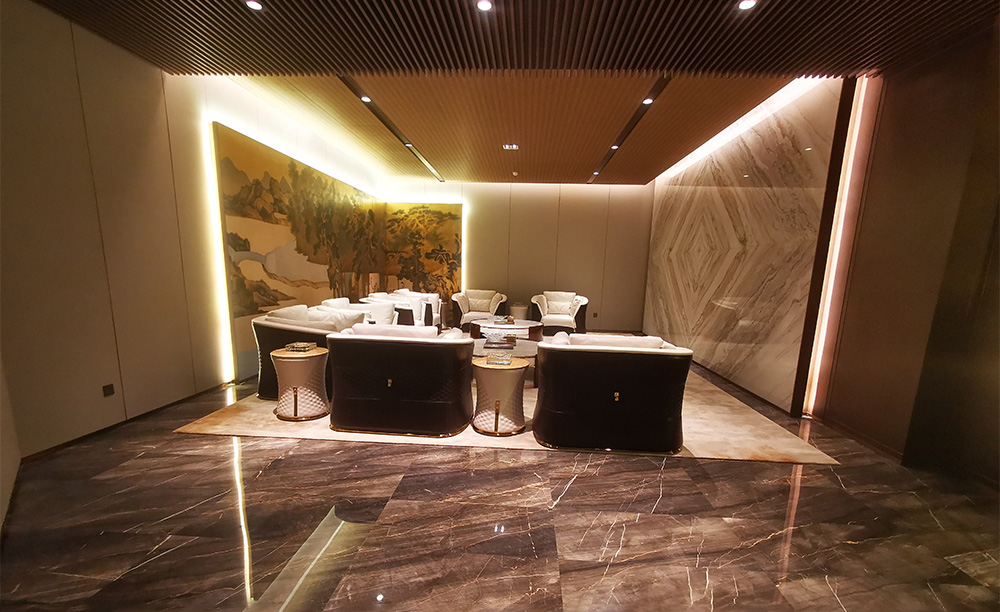 Marble Flooring and Stone Floor TilesExplore marble floor tiles in light and dark tones for balancing veining, splashbacks, and cabinetry under different room lighting.View Product →
Lighting deserves a mention as well. North-facing kitchens make warm stones look cooler than they did in the showroom, while a bright west-facing kitchen amplifies gold and yellow tones in the afternoon. Laying a sample against the actual cabinet doors, and viewing it at different times of day, prevents most of the surprises that appear after installation.
From Drawing to Install-Ready: How Custom Stone Tops Are Produced
The gap between a beautiful slab in a yard and a perfectly fitting bench top is mostly fabrication. Slabs have to be laid out so the veining flows across the seams, sink and hob openings have to be positioned to the millimetre, and polished edges have to stay consistent from one piece to the next.
There is more technique in this than most people expect. Large slabs are now scanned into high-resolution images before cutting, which allows the whole layout to be drawn and checked as a single picture rather than piece by piece. The resulting cut list reduces waste, keeps pattern alignment predictable, and makes it far less likely that a seam lands awkwardly beside a sink.
 Custom Marble Stone Countertops for Kitchens and BathroomsReview tailored marble countertops for kitchens, islands, vanities, and retail counters, with slab layout planning and finished pieces ready for installation.View Product →
For commercial projects, the practical advantage of ordering finished stone rather than raw slabs is time. A hotel kitchen, a restaurant pass or a retail counter that arrives cut, edged and ready to set can be installed as soon as the cabinets are level, with no on-site grinding or re-polishing. That difference matters when a fit-out schedule is tight.
If you want to judge this properly, it is worth looking at the capabilities behind a project rather than only the finished photographs.
Keeping a Stone Bench Top Looking Good
Stone is durable, not indestructible. A few habits protect the investment without turning the kitchen into a museum.
- Wipe up wine, lemon juice, vinegar and oil promptly. Acids are the main enemy of calcium-based stones such as marble and travertine.
- Use a pH-neutral cleaner rather than a general-purpose spray, and avoid anything abrasive.
- Use trivets and mats for very hot pans. Most stone handles heat well, but thermal shock can still crack a surface.
- Never stand on the bench top to reach a high shelf, however solid it feels.
- Re-seal on the fabricator's schedule, often every twelve to twenty-four months for marble and less frequently for granite.
- Blot rather than scrub when a stain appears, and give the sealer time to do its job.
What to Ask Before You Commit
Questions asked early save a great deal of trouble later. A short list is usually enough.
- Can I see the actual slab, or only a small sample?
- How will the seams be positioned on my island?
- What thickness and edge profile is included in the quote?
- Are sink and hob cut-outs templated on site or taken from my drawings?
- What sealing schedule do you recommend for this specific stone?
- Who handles transport, lifting and final installation?
It also helps to look at projects similar to your own rather than generic gallery images. Completed case studies show how a stone behaves once installed, how the seams were handled, and what the room actually looks like in daylight.
A kitchen bench top is a long-term decision, but it does not have to be a stressful one. Match the stone to how you cook, be honest about how much maintenance you will genuinely do, and settle the thickness, edge and seam details on paper before anything is cut. Do those three things and the surface will still look like a deliberate choice in ten years rather than an accident of budget.



 English
 Français
 عربى
 italiano