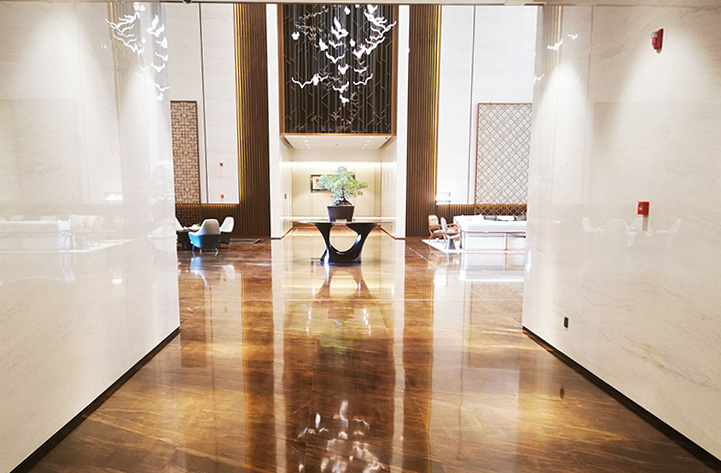
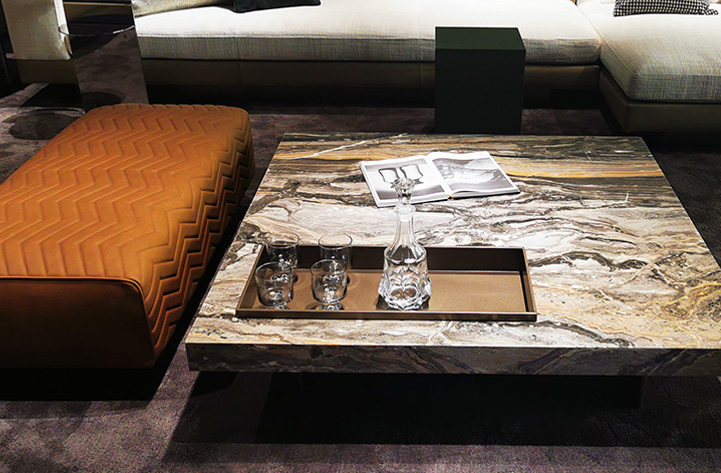
Marble wall tiles have been used in architecture and interior design for thousands of years, and their appeal has never faded. The natural veining, depth of color, and reflective quality of polished marble create a visual richness that no manufactured material has fully replicated. But choosing and installing marble wall tiles involves far more practical decision-making than simply selecting a color or pattern. Stone variety, finish type, tile size, grout joint width, substrate preparation, adhesive selection, and ongoing maintenance all affect the final result. This guide covers each of these areas with the specific detail needed to make informed decisions — whether you are tiling a bathroom feature wall, a kitchen backsplash, a hotel lobby, or a residential entrance.
Popular Marble Varieties Used for Wall Tiles
Not all marble is the same. The term "marble" covers a wide range of metamorphic limestone and dolomite stones with dramatically different appearances, hardness levels, and porosity characteristics. For wall tile applications, the following varieties are among the most widely specified:
- Carrara: Quarried in Tuscany, Italy, Carrara marble is the most recognized white marble in the world. It features a white to blue-gray background with fine, feathery gray veining. Carrara is relatively soft (Mohs hardness around 3–4) and moderately porous, making sealing essential for wall applications in wet areas. Its restrained veining suits both classical and contemporary interiors.
- Calacatta: Also Italian in origin, Calacatta marble is distinguished by its bright white background and bold, dramatic veining in gold, gray, or brown tones. It is rarer and more expensive than Carrara and is typically used as a feature or statement wall rather than an all-over wall covering. The strong veining requires careful layout planning to achieve a balanced or bookmatch pattern.
- Emperador: A Spanish dark brown marble with cream and white veining, Emperador is denser and less porous than most white marbles. Its rich, warm coloration works well in bathrooms, bar surrounds, and accent walls where depth of tone is desired rather than lightness.
- Nero Marquina: A striking black marble from the Basque region of Spain, Nero Marquina features white calcite veining against a jet-black background. It is dense and less porous than many white marbles, but the contrast between the dark stone and white grout or fixtures makes it demanding in terms of grout joint precision and surface maintenance.
- Crema Marfil: A beige to cream-toned Spanish marble with subtle veining, Crema Marfil is one of the most commonly used marbles in residential and hospitality wall tiling due to its neutral color, consistent appearance, and relatively forgiving maintenance requirements. It pairs well with warm timber tones and brass or gold fixtures.
- Green Guatemala: A deep forest-green marble with white and golden veining, this variety provides strong visual impact and is most often used in feature panels, reception walls, and commercial interiors where a bold statement is the design objective.
Marble Wall Tile Finishes and When to Use Each
The finish applied to a marble tile surface significantly changes its visual character, maintenance requirements, and suitability for specific environments. Understanding the difference between finish types prevents mismatched expectations between what is ordered and what appears on the wall after installation.

Polished Finish
Polished marble is ground and buffed to a high-gloss mirror surface that maximizes the stone's natural color depth and makes veining appear vivid and three-dimensional. It is the most popular finish for wall tiles in bathrooms, shower enclosures, feature walls, and luxury interiors. The smooth surface reflects light effectively, making spaces appear larger and brighter. The trade-off is that polished marble shows fingerprints, water spots, and etching from acidic cleaning products more readily than matte finishes, requiring more attentive maintenance.
Honed Finish
A honed finish is achieved by grinding the marble surface to a smooth, flat, matte or satin appearance without the final buffing step that creates gloss. It has a softer, more understated look that suits contemporary minimalist and Scandinavian-influenced interiors. Honed marble is slightly more porous at the surface than polished marble of the same variety and therefore requires sealing to prevent staining. It does, however, show etching and surface marks less prominently than polished finishes, making it a practical choice for kitchen backsplashes and heavily used bathroom walls.
Brushed and Leathered Finishes
Brushed and leathered finishes are applied using wire brushes or specialized abrasive pads that open the surface texture of the marble to create a slightly rough, tactile surface with a low sheen. These finishes emphasize the natural texture of the stone and give it an aged or artisanal character. They are increasingly specified in high-end residential and boutique hospitality projects where the raw material quality of stone is meant to be felt as well as seen. Both finishes require careful sealing due to the increased surface area and open pore structure.
Tumbled Finish
Tumbled marble tiles have been processed in a tumbling machine to round their edges and corners, giving them a worn, antique appearance. This finish is typically applied to smaller mosaic or brick-format tiles and suits Mediterranean, Moroccan, and rustic interior styles. The irregular edges make grout joint width less critical than with precision-cut tiles, but the uneven surface texture requires thorough sealing and more careful cleaning to prevent dirt accumulation in the surface recesses.
Choosing the Right Tile Size and Format for Walls
Marble wall tiles are available in a broad range of formats, from small mosaic pieces to large-format slabs, and the choice of format has significant consequences for the visual result, the difficulty of installation, and the structural requirements of the substrate.
| Tile Format |
Typical Size Range |
Best Applications |
Key Considerations |
| Mosaic sheets |
25×25 mm – 75×75 mm chips on mesh |
Shower niches, feature panels, curved walls |
Many grout joints; requires thorough sealing |
| Small format |
100×100 mm – 200×200 mm |
Bathroom walls, kitchen splashbacks |
Forgiving on uneven substrates |
| Standard format |
300×300 mm – 600×600 mm |
Bathroom walls, feature walls, hallways |
Most widely available; balanced visual weight |
| Large format |
600×1200 mm – 900×1800 mm |
Luxury bathrooms, hotel lobbies, feature walls |
Requires perfectly flat substrate; heavy lifting |
| Brick / metro format |
75×150 mm – 100×300 mm |
Kitchen backsplashes, bathroom feature rows |
Staggered joints add visual interest |
Large-format marble tiles create a more seamless, uninterrupted visual field that showcases the stone's natural veining to maximum effect, but they demand a substrate that is flat to within 3 mm over a 2-meter span. Any deviation beyond this tolerance will cause lippage — the stepped difference in height between adjacent tiles — which is visually unacceptable and a potential trip hazard. Large format tiles also require full-coverage adhesive application (back-buttering in addition to troweling the substrate) to prevent hollow spots that could lead to tile cracking under point loads.
Substrate Preparation for Marble Wall Tiles
Marble wall tiles are unforgiving of poorly prepared substrates. Because marble is a natural stone with relatively low flexural strength, any movement, deflection, or unevenness in the substrate will transmit directly to the tile and can cause cracking, debonding, or lippage. The following substrate conditions are essential before any marble wall tiling begins:
- Structural stability: The wall substrate must be structurally rigid and free from deflection. Stud-framed walls should use cement board (fiber cement or glass-mat gypsum) rather than standard drywall for wet area applications. Standard plasterboard is not suitable behind marble tiles in bathrooms or kitchens where moisture exposure is regular.
- Flatness: Check wall flatness with a long straightedge and correct any high spots by grinding and low spots by applying a suitable leveling or patching compound. Do not attempt to build up more than 6 mm of correction using tile adhesive alone.
- Waterproofing in wet areas: In shower enclosures, bath surrounds, and other areas of direct water exposure, apply a tanking membrane or liquid waterproofing compound to the substrate before tiling. Marble is porous and will absorb moisture that penetrates grout joints — if the substrate is not waterproofed, this leads to salt migration, staining, and eventual tile debonding.
- Priming: Apply a suitable primer to the substrate before spreading adhesive, particularly on highly absorbent surfaces such as sand-cement render or concrete block. Priming reduces differential suction, which can cause the adhesive to skin over before tiles are bedded.
Adhesive and Grout Selection for Marble
The choice of adhesive and grout has a direct effect on the long-term performance and appearance of marble wall tiles. Several specific requirements apply to marble that do not apply to ceramic or porcelain tiles.
For adhesive, use a white or grey polymer-modified cementitious adhesive rated for natural stone. Avoid standard grey adhesives behind light-colored marbles such as Carrara or Calacatta — grey adhesive can bleed through porous marble and create a grey shadow visible through the tile face, especially in polished finishes. The adhesive must also be non-staining (free from soluble salts and organic pigments). For large-format marble or wall installations requiring extended open time, specify an S1 or S2 classified flexible adhesive that can accommodate minor substrate movement without debonding.
For grout, the choice of color is critical with marble. A grout that closely matches the background color of the marble tile creates a unified, seamless appearance that emphasizes the stone's surface. A contrasting grout color emphasizes the tile geometry, which can be effective with brick-format tiles but can look busy with large-format marble. Use an unsanded grout for joints up to 3 mm wide and a fine-sanded grout for joints between 3 and 6 mm. Epoxy grout is recommended for wet areas and kitchen splashbacks where staining resistance and cleanability are priorities, though it requires more precise mixing and application timing than cementitious grout.
Sealing and Long-Term Maintenance of Marble Wall Tiles
Sealing is not optional for marble wall tiles — it is a necessary step that protects the stone from staining, moisture penetration, and surface etching. Apply a penetrating impregnating sealer to the tile surface before grouting to prevent grout pigment from staining the marble face, and apply a second coat after grouting and curing is complete. In wet areas, reapply sealer every 12–24 months depending on the porosity of the specific marble and the intensity of use. Test the sealer by dropping a few drops of water on the sealed surface — if the water beads and does not absorb within 5 minutes, the seal is still effective.
For routine cleaning, use a pH-neutral stone cleaner diluted in warm water. Never use acidic cleaners — including vinegar, lemon juice, or bathroom limescale removers — on marble wall tiles. Marble is calcium carbonate and reacts chemically with acids, causing dull, etched patches on polished surfaces that require professional re-polishing to restore. Avoid abrasive scrubbing pads on polished marble, which will scratch the surface finish. For soap scum and limescale in shower enclosures, use a stone-safe calcium remover specifically formulated for marble compatibility, and rinse the surface thoroughly with clean water after use.



 English
 Français
 عربى
عربى italiano