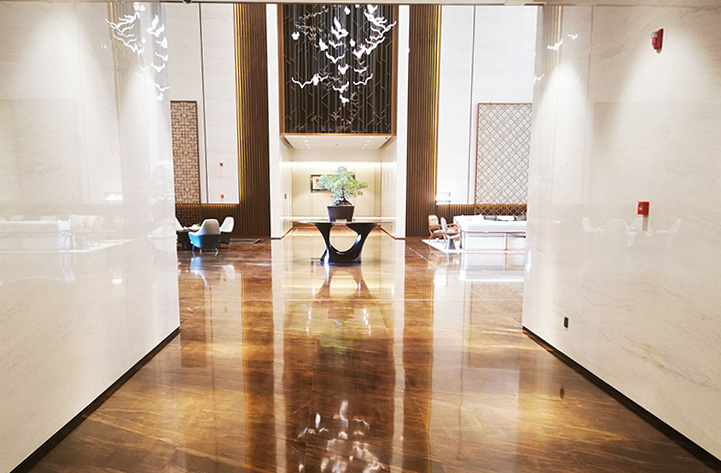
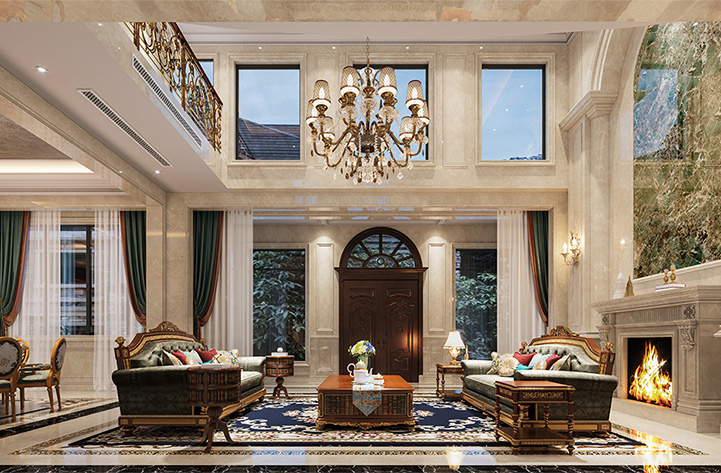
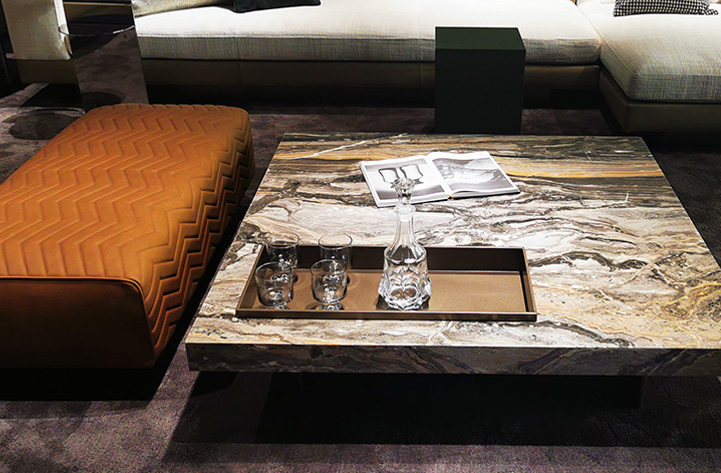
Travertine stone slab has experienced a remarkable resurgence in interior design and architecture, moving from ancient Roman aqueducts and Renaissance palaces into the kitchens, bathrooms, and living spaces of contemporary homes worldwide. This natural calcium carbonate stone — formed over thousands of years by the precipitation of mineral-rich spring and river waters — carries within its surface a geological narrative that no manufactured material can replicate. Its characteristic voids, veining, and warm tonal variation give each slab a visual personality that is entirely its own. Understanding what distinguishes travertine from other natural stones, how its formation affects its practical properties, and how to select, finish, and maintain it correctly is essential for anyone specifying or purchasing travertine stone slabs for a serious design project.
How Travertine Forms and Why It Looks the Way It Does
Travertine is a sedimentary rock classified as a form of limestone, formed when calcium carbonate dissolved in groundwater or geothermal spring water precipitates out of solution and accumulates in layers around the spring or river source. As carbon dioxide escapes from the water during this deposition process, it leaves behind the characteristic pores and voids that are perhaps travertine's most distinctive visual feature. These voids form in irregular patterns, creating the pitted, cellular texture visible on unfilled travertine surfaces and the subtle undulating contours apparent even in filled and polished slabs.
The layered deposition process also produces the banded, striated appearance that distinguishes travertine from other limestones. Variations in mineral content — particularly iron oxide concentrations — introduce the warm color shifts between cream, ivory, gold, walnut, and russet that make travertine slabs so visually engaging. The orientation in which the slab is cut relative to these depositional layers significantly affects the visual result: slabs cut perpendicular to the layers (cross-cut) reveal concentric cloud-like formations, while slabs cut parallel to the layers (vein-cut) display linear, flowing striations with a more directional, graphic quality. Both cutting orientations are used in high-end design, and the choice between them should be made deliberately based on the visual character desired for the finished installation.
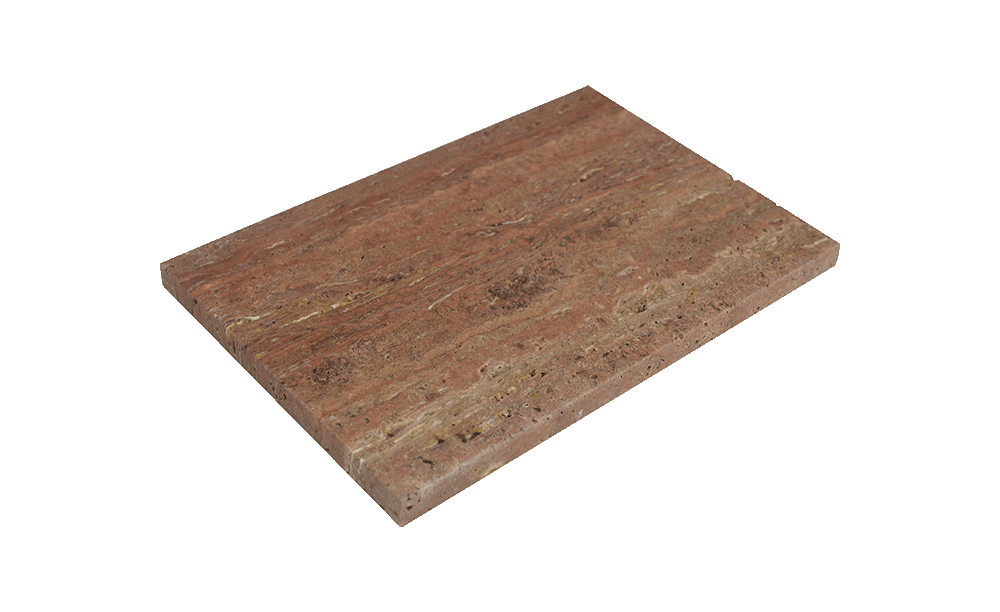
Travertine Stone Slab Colors and Their Design Applications
Travertine's color palette is defined by its geological origin — the mineral content of the water source and the environmental conditions during formation. While the range is warm and earth-toned rather than dramatically varied, the nuances within that palette are significant and should be carefully evaluated when selecting slabs for a specific design context.
| Color Variety |
Primary Tones |
Common Origins |
Best Design Applications |
| Classic Ivory / Cream |
Off-white, light beige |
Tivoli, Italy |
Bathrooms, light interiors, minimalist spaces |
| Noce (Walnut) |
Deep brown, chocolate |
Turkey, Iran |
Feature walls, flooring, warm interiors |
| Gold / Honey |
Amber, golden yellow |
Mexico, Iran |
Countertops, accent features, kitchens |
| Silver / Grey |
Cool grey, silver-white |
Turkey |
Contemporary spaces, bathrooms, facades |
| Red / Rustic |
Terracotta, burgundy |
Iran, Turkey |
Outdoor spaces, rustic interiors, feature walls |
| Scabas |
Beige with grey veins |
Turkey |
Transitional designs, mixed material schemes |
The most commercially significant travertine deposits in the world are found in Italy — particularly around Tivoli near Rome, where travertine has been quarried continuously since ancient times — Turkey, Iran, Mexico, and Peru. Each origin produces stone with subtly different mineral composition, void density, and tonal character. Italian travertine from Tivoli is generally considered the benchmark for quality and consistency, with a fine-grained structure and relatively even coloration that makes it particularly suitable for polished interior applications. Turkish travertine tends to exhibit bolder veining and more pronounced color variation, qualities that can be design assets in feature applications but require more careful slab selection to achieve a cohesive installation across large areas.
Surface Finish Options and How They Change the Stone's Character
The surface finish applied to a travertine stone slab during fabrication fundamentally transforms its appearance, texture, slip resistance, and maintenance requirements. Selecting the correct finish is as important as selecting the correct stone variety, and the decision should be made in the context of the specific application, the desired aesthetic, and the practical demands of the installation environment.
Polished Finish
Polished travertine achieves a reflective, glossy surface through progressive grinding with increasingly fine abrasives followed by buffing to a mirror-like sheen. On filled travertine, polishing reveals the full depth of color and veining, producing a surface that is visually striking and easy to clean. However, polished travertine is relatively slippery when wet, making it unsuitable for most floor applications in wet areas, and the high-gloss surface shows scratches, etching from acidic substances, and fingerprints more readily than matte finishes. It is most appropriately specified for wall cladding, countertops in low-traffic areas, and tabletops where its visual impact is maximized and the limitations of the finish are least problematic.
Honed Finish
Honed travertine has a smooth, matte surface produced by grinding to a fine level without the final buffing step that creates a gloss. The result is a surface that is softer-looking and more tactile than polished, with the stone's color appearing slightly more muted but its texture more apparent. Honed travertine is significantly more forgiving of scratches and etching than polished — surface damage blends in rather than catching the light and becoming visible — making it the preferred finish for countertops and flooring in residential and commercial applications. It remains somewhat slippery when wet in its standard form, though it is less so than polished travertine.
Brushed and Tumbled Finishes
Brushed travertine is produced by wire-brushing the surface to open the natural pores, soften the edges, and create a lightly textured, aged appearance that emphasizes the stone's natural character. Tumbled travertine takes this further by physically tumbling cut pieces to break and soften edges and create a weathered, antique appearance. Both finishes are popular in rustic and Mediterranean-style interiors and for outdoor applications where a natural, non-slip surface is desired. Their textured surfaces require more thorough cleaning to prevent dirt accumulation in the opened pores but provide good grip underfoot even when wet.
Sandblasted Finish
Sandblasting creates a uniformly rough, non-directional texture across the stone surface that provides excellent slip resistance and a consistent visual appearance suited to exterior paving, pool surrounds, and commercial flooring. The sandblasted surface opens the stone's porosity significantly, requiring thorough sealing before service and more frequent re-sealing during use than smoother finishes. It is the specification of choice for travertine used in outdoor terraces and pool decks where slip resistance is a safety requirement and weather resistance is a practical necessity.
Filled vs. Unfilled Travertine: A Critical Installation Decision
One of the most consequential decisions when specifying travertine stone slabs is whether to use filled or unfilled material. This choice affects the visual character of the finished installation, the practical performance of the surface, and the maintenance regime required throughout its service life.
Filled travertine has its natural voids grouted or filled with a cementitious or epoxy filler during fabrication, producing a smooth, continuous surface after finishing. The filler is typically color-matched to the stone but is rarely a perfect match, meaning the filled areas are subtly visible on close inspection — a quality that many designers consider an authentic part of travertine's character rather than a defect. Filled travertine is the standard specification for polished and honed interior floor and wall applications because the filled surface is easier to clean, less likely to accumulate dirt and bacteria in open voids, and provides a more even surface for foot traffic. Unfilled travertine retains its natural voids, creating a more dramatically textured surface with an authentically ancient, artisanal character that is increasingly sought after in high-design interiors. When used on floors, unfilled travertine requires careful grout joint specification and regular sealing to prevent the voids from accumulating dirt and moisture, but the visual reward — a surface that reads as genuinely natural stone rather than a refined, processed product — justifies the additional maintenance commitment for many designers and clients.
Practical Applications for Travertine Stone Slabs
Travertine stone slabs are among the most versatile natural stone materials available, suitable for an exceptionally wide range of interior and exterior applications when the appropriate grade, finish, and treatment are specified for each context.
- Kitchen countertops: Honed travertine countertops deliver a warm, sophisticated aesthetic that pairs exceptionally well with natural wood cabinetry and brass hardware. The stone must be sealed regularly and protected from acidic substances — citrus juice, vinegar, wine — that will etch the calcite surface. For high-use kitchens, travertine requires more diligent maintenance than quartzite or granite but rewards that care with an organic warmth that engineered surfaces cannot replicate.
- Bathroom walls and shower surrounds: Travertine's affinity with water aesthetics — derived from its geological origin in spring environments — makes it a natural choice for bathroom design. Large-format filled and honed travertine slabs used as shower surrounds and bath deck cladding create a spa-like atmosphere of understated luxury. Proper waterproofing of the substrate and thorough sealing of the stone surface are non-negotiable requirements for wet area applications.
- Floor tiles and paving: Travertine flooring in honed, brushed, or tumbled finish suits both interior and exterior applications. For interior floors, filled travertine in large slab format minimizes grout joints and maximizes the visual expanse of the stone. For exterior terraces and pool surrounds, brushed or sandblasted unfilled travertine provides the non-slip performance required for safety while retaining the material's natural visual warmth.
- Feature walls and cladding: Bookmatched travertine slabs — pairs of adjacent slabs opened like a book to reveal mirror-image veining patterns — create dramatic feature walls in living spaces, hotel lobbies, and commercial interiors. The cross-cut face of thick travertine slabs, revealing the concentric circular void patterns formed at the spring source, is increasingly used as an architectural statement element in high-end residential and hospitality projects.
- Exterior facades: Travertine has been used as an exterior cladding material since antiquity — the Colosseum in Rome was faced in travertine — and remains a valid choice for contemporary building facades where its weather resistance, thermal mass, and visual quality justify the cost premium over ceramic or composite alternatives. Exterior applications require stone graded and tested for freeze-thaw resistance, particularly in climates with repeated freeze-thaw cycles that can exploit natural voids and cause surface spalling in insufficiently dense stone.
Selecting High-Quality Travertine Stone Slabs: What to Evaluate
The quality of travertine stone slabs varies considerably between quarries, grades, and suppliers, and evaluating quality requires more than assessing visual appearance alone. Physical properties that are not immediately visible — density, water absorption rate, compressive strength, and the distribution and depth of natural voids — are equally important determinants of long-term performance.
- Slab thickness consistency: High-quality travertine slabs are gauged to a consistent thickness — typically 20mm or 30mm for countertop and cladding applications — with minimal variation across the slab face. Inconsistent thickness indicates lower-quality fabrication and creates installation challenges that result in uneven finished surfaces.
- Fill quality in filled slabs: Examine filled slabs for areas where the filler has pulled away from the stone, is discolored, or sits proud of the stone surface. Poor fill quality is a cosmetic defect that becomes more visible after installation and polishing and cannot be easily corrected once the slabs are laid.
- Back mesh reinforcement: Large-format travertine slabs are routinely reinforced on their back face with a fibreglass mesh embedded in resin to prevent cracking during transportation and installation. Verify that mesh reinforcement is present on slabs above approximately 600mm in either dimension, and that the mesh is fully embedded and not lifting at the slab edges.
- Void distribution and depth: In unfilled slabs, assess whether voids are distributed evenly across the face or concentrated in specific areas that may create structural weakness. Very deep voids that penetrate a significant proportion of the slab thickness are a concern for structural applications and should be evaluated against the specific loading requirements of the installation.
- Color and pattern consistency across the batch: When purchasing multiple slabs for a large installation, view the entire batch together in natural light conditions similar to the installation environment. Travertine's natural color variation means even slabs from the same block will differ, and the distribution of lighter and darker slabs across the installation area should be planned deliberately rather than left to chance.
Sealing, Cleaning, and Long-Term Care for Travertine
Travertine is a porous calcium carbonate stone that requires consistent sealing and appropriate cleaning practices to maintain its appearance and protect its surface from staining and etching. The maintenance commitment for travertine is more significant than for harder, denser stones such as granite or quartzite, and this reality should be communicated clearly to clients during the specification process so that realistic expectations are established from the outset.
Sealing should be performed before the stone is grouted or subjected to any contact with substances that could penetrate its surface. A penetrating impregnating sealer — one that fills the microscopic pores within the stone rather than forming a surface coating — is the appropriate product for travertine in most applications. Surface coatings that form a film over the stone can create maintenance challenges by trapping moisture beneath the coating and by wearing unevenly in traffic areas, revealing the underlying unsealed stone. The frequency of re-sealing depends on the porosity of the stone, the finish applied, and the intensity of use, but annual re-sealing of countertop and floor travertine in residential applications is a reasonable baseline recommendation. For daily cleaning, pH-neutral stone-specific cleaners should be used exclusively — standard household cleaners, vinegar-based products, bleach, and any acidic cleaning solutions will chemically dissolve the calcite surface of travertine, producing dull etching marks that require professional re-polishing or honing to correct. With appropriate sealing, correct cleaning products, and prompt attention to spills — particularly red wine, coffee, and citrus — travertine stone slabs will maintain their beauty and structural integrity for generations, aging gracefully in the tradition of the ancient buildings that first established this remarkable material's enduring architectural legacy.



 English
 Français
 عربى
عربى italiano