In today's competitive retail landscape, the physical store environment is one of the most powerful tools a brand has to communicate its identity, attract foot traffic, and drive purchasing decisions. Shoppers are drawn to spaces that feel curated, textured, and visually rich—and few materials achieve this as naturally and effectively as stone. Decorative stone props have become an increasingly popular choice for visual merchandisers and store designers who want to add authenticity, weight, and premium character to their displays. Whether used in fashion boutiques, jewelry stores, home décor shops, beauty retailers, or garden centers, stone props bring a grounded, organic quality that digital signage and printed backdrops simply cannot replicate. This article provides a thorough, practical guide to understanding, selecting, and arranging decorative stone props in a retail store setting.
What Are Store Decorative Stone Props?
Store decorative stone props encompass a broad category of display accessories made from natural stone, reconstituted stone, resin-cast stone-effect materials, or lightweight foam composites finished to replicate stone textures and colors. They range from raw, unfinished river rocks and slate slabs to precisely cut marble pedestals, stacked stone risers, geode bookends, and sculpted stone-look platforms purpose-built for retail merchandising. Some props are genuinely quarried stone—granite, marble, travertine, slate, sandstone, or quartz—while others are engineered materials designed to deliver the visual appeal of stone at a fraction of the weight and cost, making them easier to reposition and safer to use in high-traffic retail environments.
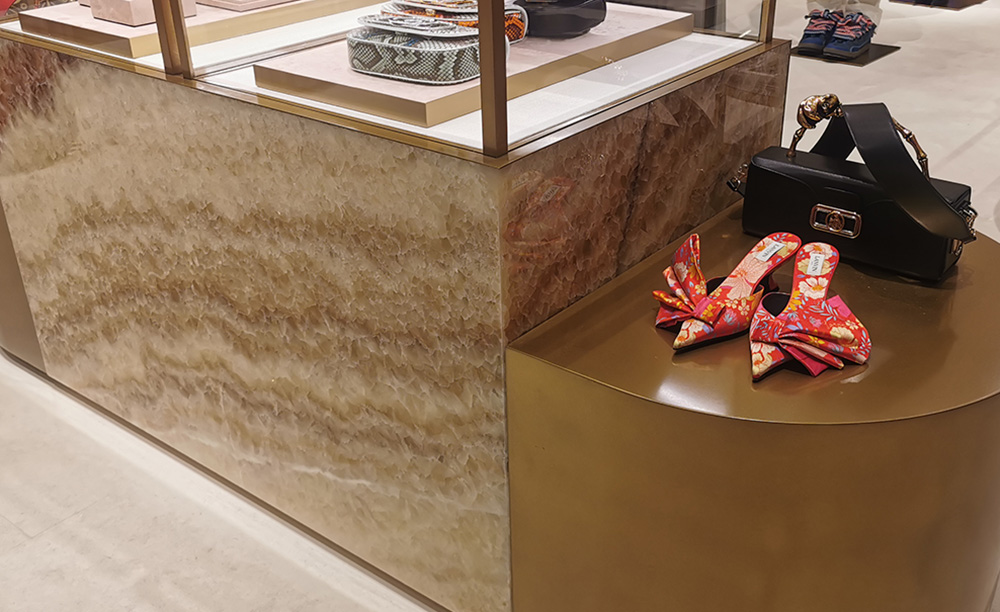
The defining characteristic of a stone prop in a retail context is its function as a display support or visual anchor rather than a structural or architectural element. A marble riser elevates a perfume bottle. A cluster of polished river stones frames a jewelry tray. A rough-hewn slate slab serves as the base for a folded knitwear display. In each case, the stone material adds tactile richness, visual contrast, and a sense of natural authenticity to the merchandise presentation.
Why Stone Props Work So Well in Retail Environments
The effectiveness of decorative stone props in retail settings is rooted in consumer psychology and the principles of visual merchandising. Stone triggers associations with permanence, luxury, nature, and craftsmanship—values that many brands actively want to communicate. When a customer sees a skincare product presented on a slice of white quartz or a watch displayed on a dark granite platform, the stone material subconsciously elevates the perceived value of the product itself. This phenomenon, known in retail design as the "halo effect," means the positive attributes of the display material transfer to the product in the shopper's perception.
Stone props also solve a practical problem in visual merchandising: they provide visual variety and height variation without requiring complex, expensive display furniture. A collection of stones in different sizes and finishes can create a dynamic, layered display landscape in a matter of minutes. Their weight and solidity also mean they do not shift or tip easily, making them stable platforms even for fragile or precisely positioned merchandise.
Types of Stone Props and Their Best Retail Applications
Choosing the right type of stone prop for your store depends on your brand aesthetic, product category, and display objectives. The table below outlines the most common stone prop types and their ideal retail applications:
| Stone Prop Type |
Material / Finish |
Best For |
| Marble Risers and Pedestals |
Polished or honed marble |
Luxury beauty, jewelry, fashion accessories |
| River Rock Clusters |
Natural polished or matte river stones |
Spa, wellness, candle, and lifestyle stores |
| Slate Slabs and Tiles |
Natural cleft or brushed slate |
Menswear, outdoor gear, craft food and beverage retail |
| Geode and Crystal Specimens |
Natural amethyst, quartz, agate |
Gift shops, bohemian retail, jewelry displays |
| Travertine Blocks |
Natural or filled travertine |
Home décor, interiors retail, Mediterranean aesthetics |
| Resin Stone-Effect Props |
Lightweight resin with stone texture finish |
Window displays, seasonal themes, high-rotation displays |
| Stacked Stone Columns |
Faux stacked stone panels or real stone columns |
Feature walls, entrance displays, brand statement zones |
Matching Stone Props to Your Store's Brand Aesthetic
Not every stone type suits every retail brand. The texture, color, and finish of the stone props you choose should reinforce your store's existing visual identity rather than contradict it. Mismatched materials—for example, rough, rustic sandstone in a minimalist, monochromatic luxury environment—create visual dissonance that undermines the intended brand message.
Luxury and High-End Retail
For luxury fashion, fine jewelry, premium beauty, and high-end watches, polished white Carrara marble, black absolute granite, or honed grey limestone are the most effective stone prop choices. Their smooth surfaces, refined colorways, and association with architectural luxury communicate exclusivity and precision. Marble risers in varying heights create elegant product tiers, while thin marble slabs can serve as backdrop panels behind hero products on shelving units. Keep the stone shapes geometric and the cuts clean—raw edges or rough textures undermine the luxury signal.
Natural, Wellness, and Lifestyle Retail
Spas, wellness boutiques, organic beauty stores, and lifestyle retailers benefit from softer, more organic stone prop choices. River rocks, unpolished travertine, tumbled limestone, and natural crystal specimens communicate a connection to nature, mindfulness, and authenticity. Arrange river stones loosely around candles, essential oil displays, or bath product collections to create a calming, spa-like visual zone. Crystals and geode specimens double as both display props and retail products in gift and wellness contexts, offering dual functionality.
Industrial, Masculine, and Outdoor-Oriented Retail
Menswear stores, outdoor equipment retailers, craft spirit shops, and artisanal food stores can leverage the rough, textural quality of slate, dark basalt, and raw granite to communicate ruggedness, craftsmanship, and authenticity. A thick slate slab as a display base for leather goods or a cluster of dark basalt stones anchoring a whisky bottle display reinforces the brand's connection to natural materials and quality craftsmanship. The contrast between the raw stone and the refined product creates a compelling visual tension.
Practical Techniques for Arranging Stone Props in Store Displays
Even the most beautiful stone props will fail to engage shoppers if they are arranged poorly. Effective stone prop styling follows established visual merchandising principles while leveraging the unique properties of stone as a display material.
- Create Height Variation: Use stone risers, blocks, and slabs of different heights to build a tiered display landscape. A rule of thumb is to work in groups of three—a tall, medium, and low element—which creates a naturally dynamic composition that draws the eye across the entire display rather than fixating on a single point.
- Use Stone as a Framing Device: Rather than placing stone props behind or under products, use them on either side to frame the merchandise and direct the customer's gaze inward. A pair of bookend geodes or flanking slate pieces creates a natural visual boundary that makes the product the focal point.
- Contrast Textures Deliberately: The visual power of stone props is maximized when they are paired with contrasting material textures. Smooth marble against rough linen, polished granite under matte ceramics, or raw slate beneath glossy packaging—these textural contrasts make both elements more visually interesting and prevent the display from reading as flat or monotonous.
- Limit the Color Palette: Stone props naturally introduce color variation through their veining, speckles, and natural tone ranges. To avoid visual chaos, restrict the overall display to two or three complementary colors drawn from both the stone and the product packaging. A white marble riser with grey veining pairs naturally with products in white, silver, gold, or soft green packaging.
- Anchor Window Displays with Large Statement Pieces: In storefront window displays, a single large statement stone—a substantial geode slice, a thick marble slab, or a stacked stone column—creates a visual anchor that draws attention from the street. Build the rest of the display composition around this anchor, using smaller props and products to fill in the surrounding space.
- Rotate Props Seasonally: Stone props should not become permanent, invisible fixtures. Rotate their arrangement, combination, and positioning at regular intervals—ideally aligned with seasonal campaigns or product launches—to keep the display environment fresh and give regular customers a reason to re-engage with familiar spaces.
Weight, Safety, and Practical Handling Considerations
One of the most significant practical challenges with natural stone props is their weight. A solid marble riser measuring 30cm × 20cm × 10cm can weigh 15–20 kilograms, making it difficult to reposition frequently and potentially hazardous if it falls from an elevated display surface. Before committing to natural stone props, assess your display surfaces for adequate load-bearing capacity and ensure that any elevated stone elements are positioned securely, with non-slip pads or adhesive bumpers on their bases.
For high-rotation displays, window installations where props must be changed weekly, or elevated or suspended display scenarios, lightweight resin stone-effect props offer a compelling alternative. High-quality resin props are virtually indistinguishable from genuine stone at normal viewing distances and can weigh as little as 10–15% of their natural stone equivalents. They are also less prone to chipping or cracking if accidentally dropped, reducing both product damage risk and staff injury risk during installation and changeover.
Where to Source Quality Store Decorative Stone Props
Sourcing stone props for retail use requires balancing aesthetic quality, consistency, durability, and cost. Several reliable sourcing channels exist, each with distinct advantages:
- Visual Merchandising Prop Suppliers: Specialist prop suppliers serve the retail and events industry with purpose-built display stone products. These suppliers offer consistent sizing, surface finishes, and color batches—critical for multi-location retailers who need identical displays across multiple stores.
- Stone and Marble Fabricators: Local stone yards and marble fabricators can cut custom risers, platforms, and slabs to precise dimensions from offcuts and remnant slabs at competitive prices. This is an excellent option for independent retailers seeking unique, one-of-a-kind display pieces.
- Wholesale Mineral and Crystal Suppliers: For geodes, crystal clusters, and natural mineral specimens, wholesale suppliers serving the gift and wellness trade offer bulk purchasing options with significant cost advantages over retail pricing.
- Landscaping and Garden Supply Centers: River rocks, slate pieces, and rough stone boulders are available in bulk from landscaping suppliers at very low cost per unit. These are ideal for large-format floor displays or garden retail environments where a natural, abundant stone aesthetic is desired.
Maintaining and Cleaning Stone Display Props
Natural stone props require appropriate care to maintain their visual appeal over time. Porous stones such as travertine, sandstone, and unpolished marble can absorb oils, product residues, and dust, leading to staining and discoloration that degrades their display quality. Seal porous stone props with a penetrating stone sealer before first use and reapply annually. For daily maintenance, wipe stone surfaces with a damp, lint-free cloth and avoid acidic or abrasive cleaning products, which can etch polished surfaces or degrade the sealant. Polished marble and granite are relatively non-porous and easier to maintain, requiring only regular dusting and occasional cleaning with a pH-neutral stone cleaner to preserve their surface finish.
Conclusion
Decorative stone props represent one of the most versatile and visually impactful tools available to retail display designers. Their natural authenticity, tactile richness, and broad material range allow them to serve equally well in luxury flagship environments and rustic artisanal boutiques. By selecting stone types that align with your brand aesthetic, applying sound visual merchandising principles in their arrangement, addressing practical weight and safety considerations, and maintaining them correctly, store decorative stone props can consistently elevate your merchandise presentation, reinforce your brand identity, and create the kind of immersive, sensory-rich shopping environment that keeps customers engaged and coming back.



 English
 Français
 عربى
عربى italiano