Marble has been a symbol of luxury and elegance for centuries, gracing everything from ancient sculptures to modern dining tables. When investing in marble furniture, particularly a marble dining table, understanding quality markers is essential to ensure you're getting value for your money. Quality marble not only looks stunning but also stands the test of time, maintaining its beauty and structural integrity for generations. This comprehensive guide will walk you through the critical factors that distinguish premium marble from inferior alternatives.
Understanding Marble Grades and Classifications
The marble industry uses a grading system that categorizes stone based on appearance, durability, and structural characteristics. This classification directly impacts pricing and suitability for different applications. Understanding these grades helps you make informed decisions when selecting marble furniture.
Marble is typically classified into four main grades: A, B, C, and D. Grade A represents the highest quality, featuring uniform coloring, minimal veining irregularities, and no visible flaws or soft veins. This grade is quarried from the best parts of the stone deposit and requires minimal processing. Grade B marble contains slight variations in color and veining patterns with minor imperfections that can be filled during processing. Grade C shows more noticeable color variations, requires more filler, and may have visible repairs. Grade D, the lowest grade, exhibits significant flaws, structural weaknesses, and extensive repairs.
For marble dining tables and furniture, Grade A or B marble is recommended. These grades offer the durability and aesthetic appeal necessary for functional furniture pieces that will withstand daily use. Lower grades might be suitable for decorative applications but lack the structural integrity required for dining tables that support weight and experience regular contact.
Visual Inspection: What Your Eyes Can Tell You
A thorough visual examination reveals much about marble quality. Begin by assessing the surface finish under good lighting conditions. High-quality marble displays a consistent polish or honed finish without dull spots, scratches, or uneven areas. The reflection should be uniform across the entire surface when viewed from different angles.
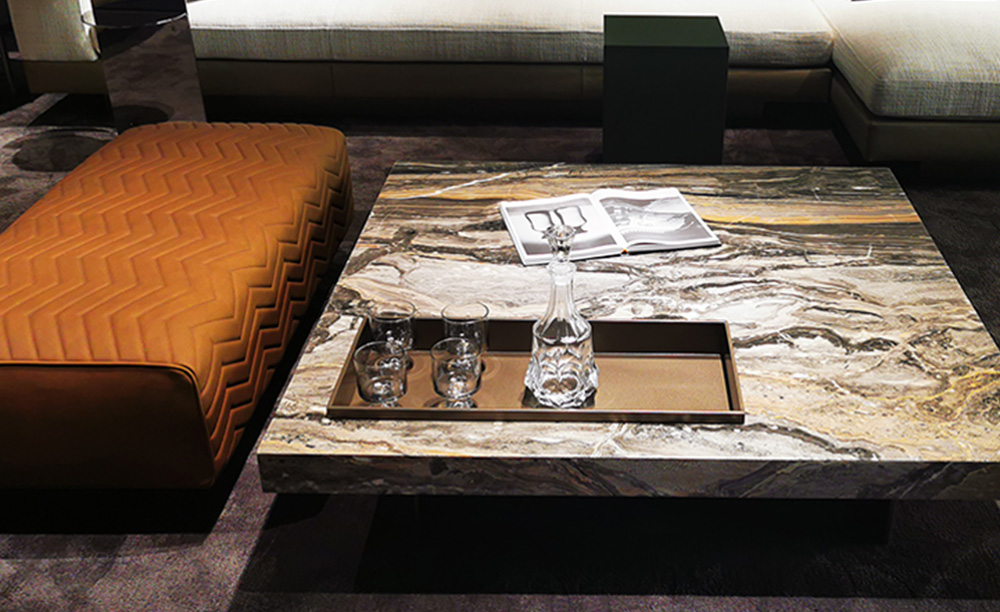
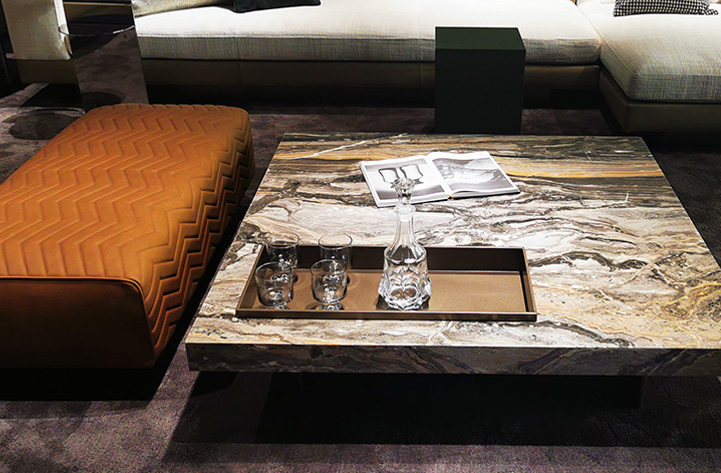
Examine the veining patterns closely. Natural marble veining should flow organically throughout the stone, creating a harmonious visual narrative. Premium marble exhibits veins that are well-distributed and integrated into the stone matrix, not appearing as separate cracks or fissures. The veins should have depth and dimension rather than looking superficial or painted on.
Color consistency is another critical visual indicator. While marble naturally contains color variations, quality pieces show cohesive color distribution without jarring contrasts or muddy patches. The background color should be clean and vibrant, whether you're examining white Carrara, green Emperador, or black Marquina marble. Any discoloration, rust stains, or yellowish tints often indicate the presence of iron deposits or oxidation, which can worsen over time.
Surface Defects to Watch For
- Pitting or small holes that indicate porosity and potential weakness
- Cracks or fissures that extend beyond natural veining patterns
- Excessive use of epoxy filler, which appears as shiny or plastic-like patches
- Mesh backing visible from edges, indicating structural reinforcement for weak stone
- Inconsistent thickness when measuring different sections of the slab
Physical Tests for Marble Durability
Beyond visual assessment, physical testing provides concrete evidence of marble quality. The water absorption test is particularly revealing. Apply a small amount of water to an unsealed section of the marble and observe how quickly it absorbs. High-quality marble with low porosity will resist water penetration for several minutes, while inferior marble shows immediate absorption and darkening.
The sound test, though less scientific, offers valuable insights. Gently tap the marble surface with your knuckles or a small tool. Quality marble produces a clear, ringing tone that resonates, indicating dense, solid stone. A dull, flat sound suggests the presence of cracks, excessive filler, or low-density material that compromises structural integrity.
Scratch resistance testing should be approached cautiously but can be informative. Using a copper penny or similar object, attempt to scratch an inconspicuous area of the marble. Premium marble resists scratching from materials softer than itself on the Mohs hardness scale. Marble typically rates between 3 and 4 on this scale, so it should not scratch easily from copper or fingernails but will scratch from steel or glass.
Examining Marble Thickness and Structural Integrity
Thickness plays a crucial role in determining the longevity and functionality of marble furniture. For dining tables, the ideal marble thickness ranges from 20mm to 30mm (approximately 0.75 to 1.25 inches). This provides adequate strength to support daily use without excessive weight that complicates handling and installation.
Thinner marble slabs, while potentially less expensive, require reinforcement through resin backing or mesh support. While this reinforcement isn't necessarily problematic, it does indicate that the stone itself lacks inherent strength. Premium marble furniture typically uses thicker slabs that rely on the stone's natural durability rather than artificial reinforcement.
Inspect the edges and underside of the marble piece carefully. Quality marble shows consistent composition throughout its thickness without layers, patches of different material, or excessive resin. The edge finish should be smooth and uniform, demonstrating the stone's ability to hold detailed work without chipping or crumbling. Any composite layers or bonded sections suggest lower-grade material attempting to mimic solid marble.
| Thickness Range |
Application |
Quality Level |
| 12-18mm |
Wall cladding, decorative panels |
Standard (requires backing) |
| 20-25mm |
Countertops, smaller tables |
Good quality |
| 25-30mm |
Dining tables, heavy-use surfaces |
Premium quality |
| 30mm+ |
Luxury furniture, architectural features |
Ultra-premium |
Origin and Quarry Reputation Matter
The source of marble significantly influences its quality characteristics. Certain regions have established reputations for producing exceptional marble due to geological conditions and extraction expertise. Italian marble from Carrara, Calacatta, and Statuario quarries remains the gold standard for white marble, prized for purity and minimal impurities. Turkish, Greek, Spanish, and Portuguese quarries also produce high-quality marble varieties with distinctive characteristics.
When evaluating marble furniture, inquire about the stone's origin. Reputable manufacturers and retailers should provide documentation about the marble's source. This transparency indicates confidence in the product and allows you to research the quarry's reputation. Premium marble dining tables often come with certificates of authenticity that detail the stone type, quarry location, and grade classification.
Be cautious of vague descriptions like "imported marble" without specific origin details. While marble from various countries can be excellent quality, the lack of specificity might indicate lower-grade material or composite products marketed as natural marble. Asian quarries, particularly in China and India, produce vast quantities of marble ranging from exceptional to poor quality, making origin verification especially important for these sources.
Renowned Marble Types and Their Characteristics
- Carrara: White to blue-grey background with soft, feathery grey veining; consistent quality and availability
- Calacatta: Bright white background with bold, dramatic gold or grey veining; rarer and more expensive than Carrara
- Statuario: Pure white with distinct grey veining; historically used for sculptures and premium applications
- Emperador: Rich brown tones with lighter veining; Spanish origin; excellent durability
- Nero Marquina: Deep black with white veining; Spanish quarries; striking contrast for modern designs
Finishing Quality and Surface Treatment
The final finish applied to marble significantly impacts both its appearance and performance. Quality marble furniture showcases expert finishing that enhances natural beauty while providing practical protection. The most common finishes include polished, honed, brushed, and tumbled surfaces, each requiring different skill levels and affecting durability differently.
A polished finish should display mirror-like reflectivity with no waviness, distortion, or dull patches. This finish requires perfectly flat surfaces and extensive buffing with progressively finer abrasives. Inferior marble cannot achieve consistent polish because structural weaknesses, excessive porosity, or soft veins prevent uniform buffing. If a polished marble dining table shows uneven gloss levels, this indicates either poor-quality stone or inadequate finishing work.
Honed finishes provide a matte, satin-smooth surface without gloss. Quality honed marble feels uniformly smooth without rough patches or texture variations. This finish actually requires similar precision to polished surfaces but stops before the final buffing stages. The advantage of honed finishes is they hide minor scratches and etching better than polished surfaces while still displaying the stone's natural character.
Examine the sealing treatment applied to the marble. Quality furniture manufacturers apply professional-grade sealers that penetrate the stone to provide protection without altering appearance significantly. Poor-quality sealers create a visible coating that looks plastic or causes color enhancement that appears artificial. Ask about the sealer type used and whether periodic resealing is required. High-quality marble with proper sealing should resist staining from common substances when spills are cleaned promptly.
Finally, assess the overall craftsmanship of the marble furniture piece. Quality construction features precision-cut edges, smooth corners without chips, and stable mounting or support structures. The marble should be securely attached to its base without wobbling or gaps. These finishing details separate premium marble furniture from mass-produced alternatives and directly impact longevity and user satisfaction.
Investing in quality marble furniture, especially a marble dining table, requires careful evaluation of multiple factors. By examining grades, visual characteristics, physical properties, thickness, origin, and finishing quality, you can confidently distinguish superior marble from inferior alternatives. Remember that while premium marble commands higher prices, its durability, timeless beauty, and lasting value make it a worthwhile investment that enhances your home for decades to come.



 English
 Français
 عربى
عربى italiano